
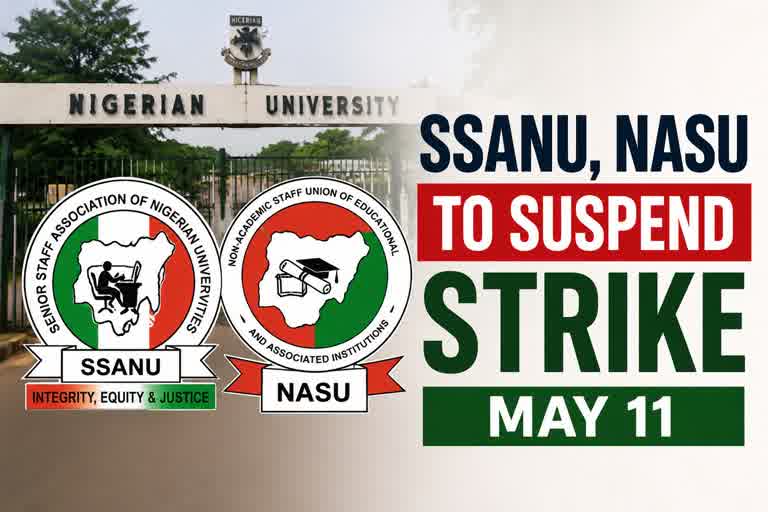
The Joint Action Committee of the Senior Staff Association of Nigerian Universities and the Non-Academic Staff Union of Educational and Associated Institutions has announced plans to suspend its nationwide strike from Monday, May 11, 2026.
The decision followed renewed negotiations between the unions and the Federal Government over unresolved welfare issues and the implementation of the 2009 agreement.
The development is expected to restore full administrative activities across public universities in Nigeria after days of disruption caused by the industrial action.
Why SSANU and NASU Suspended the Strike
According to a circular issued to branch leaders, the unions agreed to suspend the strike after the Federal Government assured them that all outstanding renegotiation issues would be resolved within two weeks.
The circular was jointly signed by NASU General Secretary, Peters Adeyemi, and SSANU National President, Mohammed Ibrahim.
The unions explained that the breakthrough came after discussions with the Federal Government’s Expanded Renegotiation Committee led by former Head of Service, Yayale Ahmed.
Part of the agreement includes renewed talks on the Consolidated Tertiary Institutions Salary Structure and other welfare concerns affecting non-academic university workers.
The statement noted that any final adjustment to the government’s offer would still require approval from President Bola Tinubu.
Universities Expected To Resume Full Operations
SSANU and NASU directed branch chairpersons across public universities to hold congresses and inform members about the decision to suspend the strike.
The unions said the suspension would allow negotiations to continue while workers return to duty.
The strike began on May 1, 2026, and affected several administrative operations in Nigerian universities, including student registration, hostel management, documentation, and other support services.
Although lecturers were not part of the industrial action, many institutions experienced delays and partial shutdowns because non-academic workers handle major administrative responsibilities on campuses.
Concerns Over Nigeria’s Education Sector
The suspension of the strike has raised hopes among students and parents who have expressed concerns over repeated disruptions in Nigeria’s tertiary education system.
University unions have repeatedly clashed with the Federal Government over salary structures, working conditions, and delayed implementation of agreements.
Education stakeholders believe a successful conclusion of the renegotiation process could help improve stability in public universities and reduce future industrial actions.