

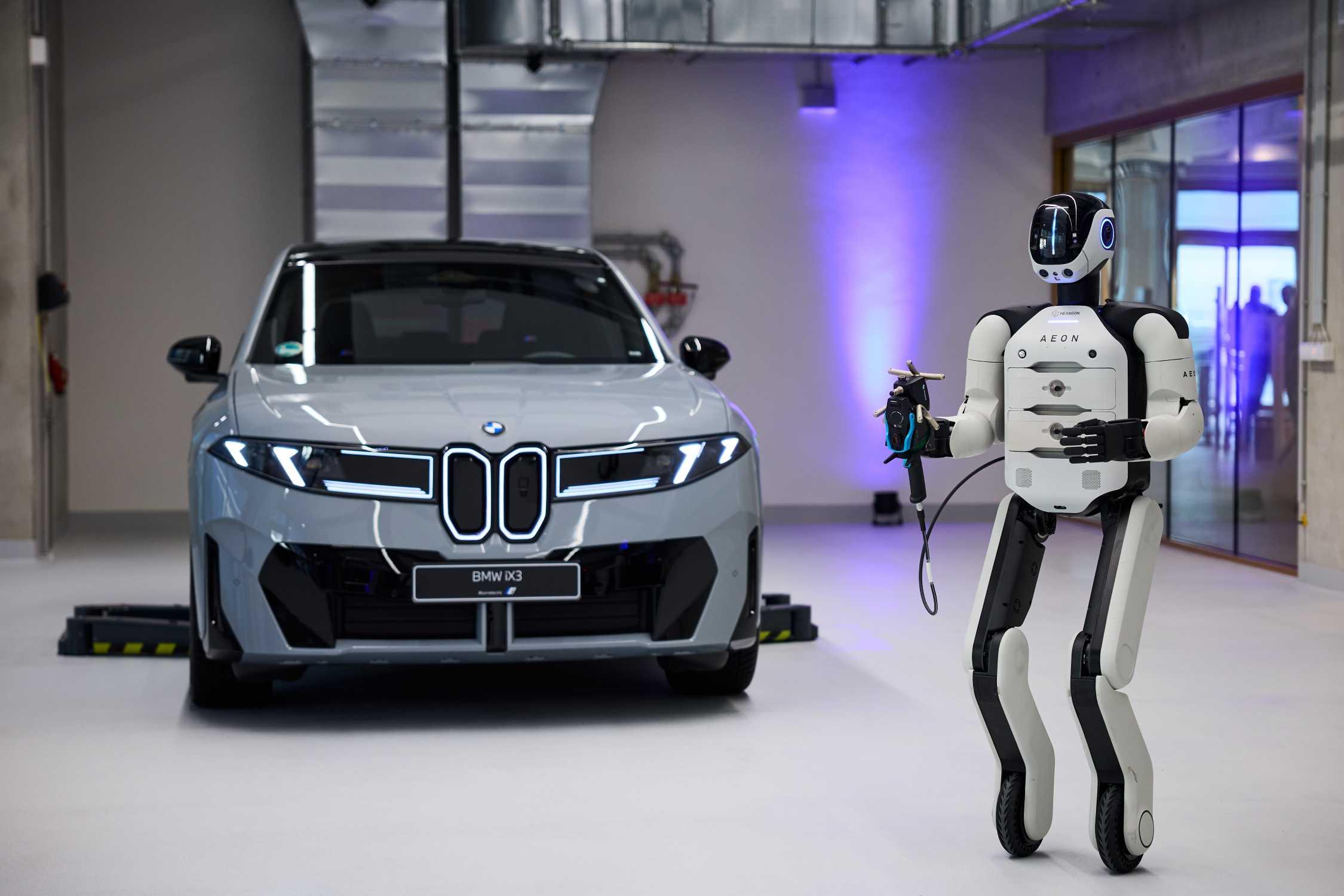
BMW has announced plans to introduce humanoid robots into its European manufacturing operations, marking a major shift in the future of automotive production.
The German carmaker said the AI-powered robots will begin working at its Leipzig factory this summer as part of ongoing efforts to modernise production systems and improve efficiency.
BMW Says Humanoid Robots Represent Future of Manufacturing
According to company executives, the robots are designed to perform tasks alongside human workers without requiring major changes to existing factory layouts.
BMW explained that unlike traditional robotic arms, humanoid robots can fit naturally into workspaces already built for people.
The company believes this approach could significantly reduce production costs while increasing flexibility on assembly lines.
Meet “Aeon,” the Human-Shaped Factory Robot
The robots, known as “Aeon,” were developed by Hexagon Robotics and are equipped with advanced sensors, cameras, microphones and AI-powered learning systems.
Standing about 1.65 metres tall, the robots are capable of carrying manufacturing parts, performing repetitive assembly tasks and navigating factory environments independently.
BMW said the robots were trained using simulations and real-world human movements to improve efficiency and adaptability.
AI and Automation Reshape Global Car Industry
The move reflects a wider trend across the automotive industry, where manufacturers are increasingly investing in artificial intelligence and robotics.
Companies including Toyota, Hyundai and Xiaomi are also exploring humanoid robotics for industrial operations.
Industry experts believe advancements in AI are helping robots become more adaptable to changing environments and complex production tasks.
BMW Says Robots Will Support, Not Replace Workers
BMW executives stressed that the technology is intended to support human workers rather than eliminate jobs.
The company said the robots could assist with physically demanding and repetitive tasks while helping address future labour shortages.
Executives also noted that earlier waves of factory automation ultimately created new technical and engineering jobs across the industry.
Experts Warn Against Overhyping Robot Capabilities
Despite growing excitement, analysts cautioned that humanoid robots are still developing and remain limited in several areas.
Some experts argue that public demonstrations often create unrealistic expectations about what the technology can currently achieve.
However, many believe the next few years could bring rapid progress in AI-driven industrial robotics.