
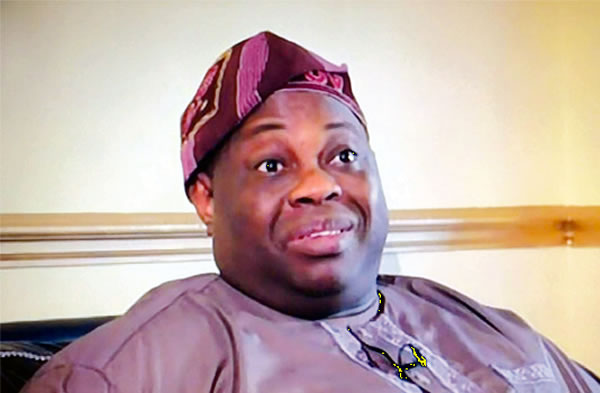
Publisher of Ovation International Magazine, Dele Momodu, has shared emotional details about his escape from Nigeria during the military regime of late General Sani Abacha.
Speaking during an interview on the Morayo Show hosted by Morayo Afolabi-Brown, Momodu revealed that he crossed the Seme border on foot while fleeing political persecution in 1995.
According to him, the journey remains one of the most painful moments of his life because he had to leave behind his wife and infant son without knowing if he would ever return alive.
Momodu explained that his first son was less than one year old when he decided to leave Nigeria for safety reasons.
“The morning I was leaving, my first son was less than one year old. He was lying beside my wife, and I became emotional looking at him,” he said.
The media entrepreneur added that he secretly crossed into Cotonou through the Seme border in the early hours of the morning.
“I crossed the Seme border on foot into Cotonou very early in the morning,” Momodu recalled.
He further stated that fear and uncertainty overwhelmed him immediately after arriving in Benin Republic because he had no clear idea of what the future held.
“When I got to Cotonou, I started crying again because I didn’t know where I was going, whether I would survive, or when I would return home,” he added.
Momodu said his years in exile later became a turning point in his life and career. According to him, the experience eventually led to the creation of Ovation International Magazine in 1996.
“If I had not gone on that journey, there would be no Ovation today,” he stated.
The former presidential aspirant also explained that his exile years strengthened his commitment to democracy and opposition politics in Nigeria.
He noted that although he once shared similar pro-democracy experiences with President Bola Tinubu during the military era, he chose not to join the ruling All Progressives Congress because he believes strong opposition is necessary for democracy to thrive.
Momodu disclosed that he lived in exile from 1995 to 1998 after security operatives allegedly began searching for him over claims linking him to Radio Freedom, a station associated with pro-democracy campaigns during the June 12 struggle.
During his exile, he reportedly travelled through Togo and Ghana before finally settling in the United Kingdom, where he continued working with pro-democracy activists campaigning against military rule in Nigeria.